Workshops · Australia
The Prado was in Drive. It didn’t know it.
Live data changed Doug’s investigation of a Prado with several warning lights, leading him from the radar system to a gear-selector communication problem.
The story
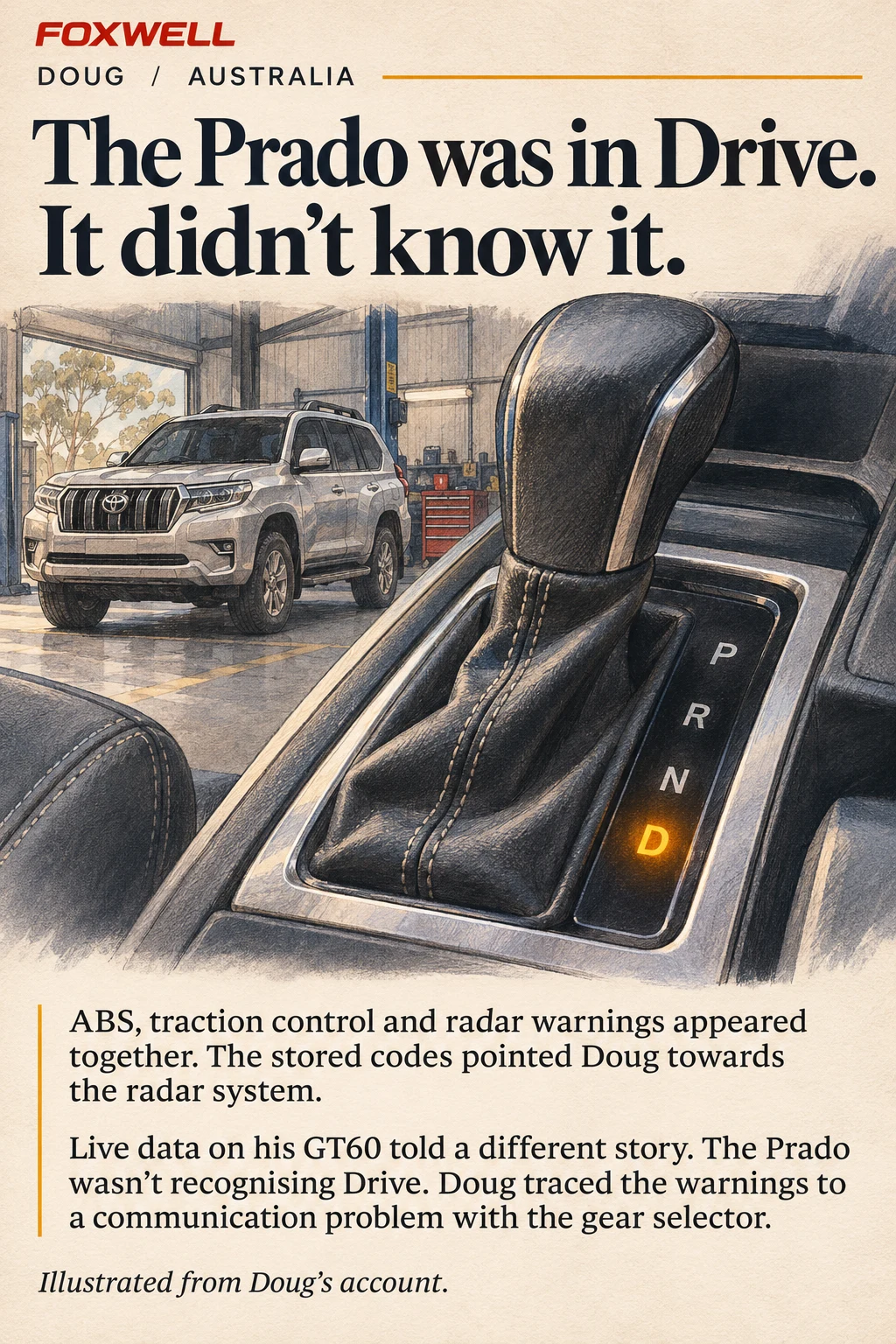
The Toyota Prado’s gear lever was in Drive. The vehicle itself was not recognising it.
When Doug checked the Prado in Australia, warnings were showing for the ABS, traction control and radar systems. The vehicle was in reduced-power mode, and the initial fault codes pointed towards the radar system.
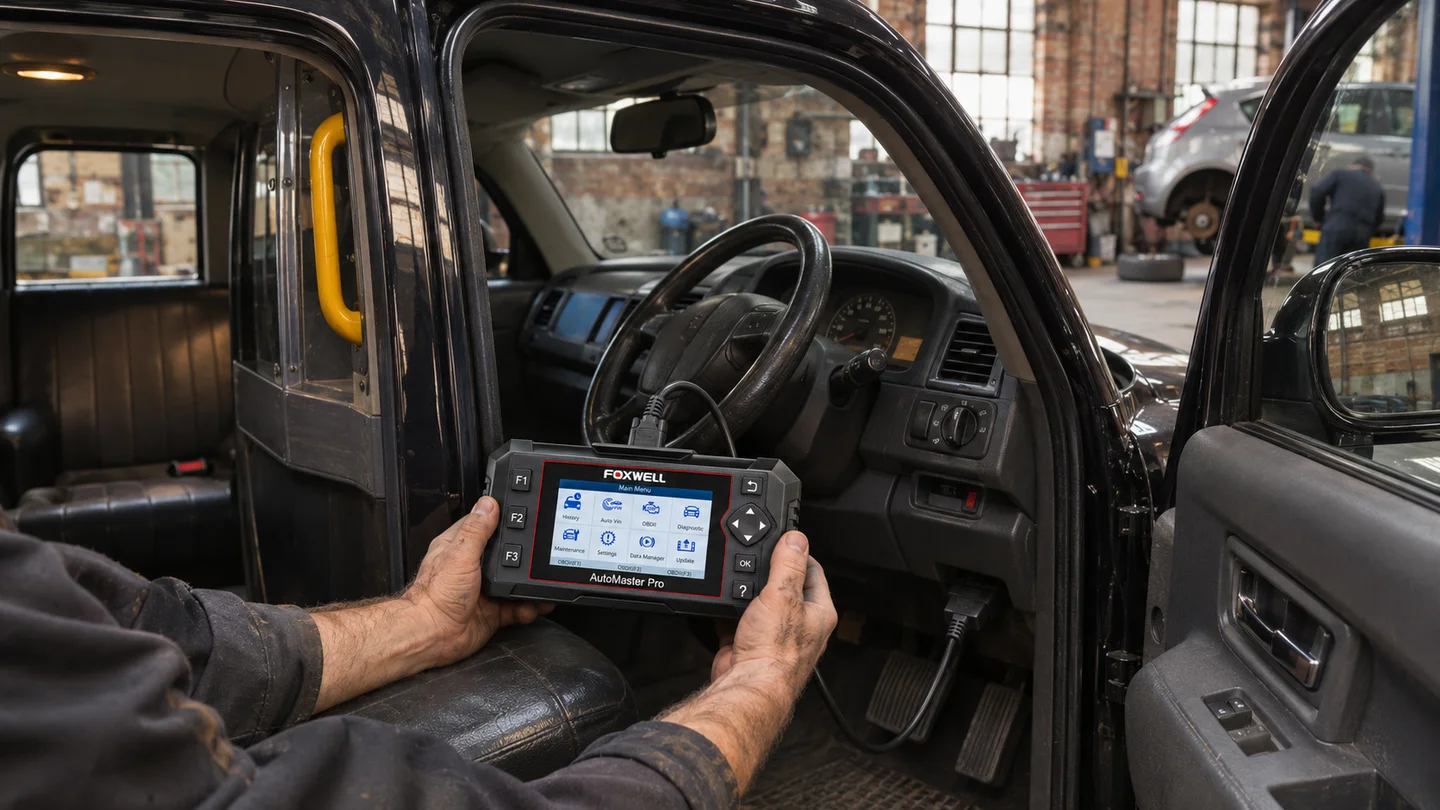
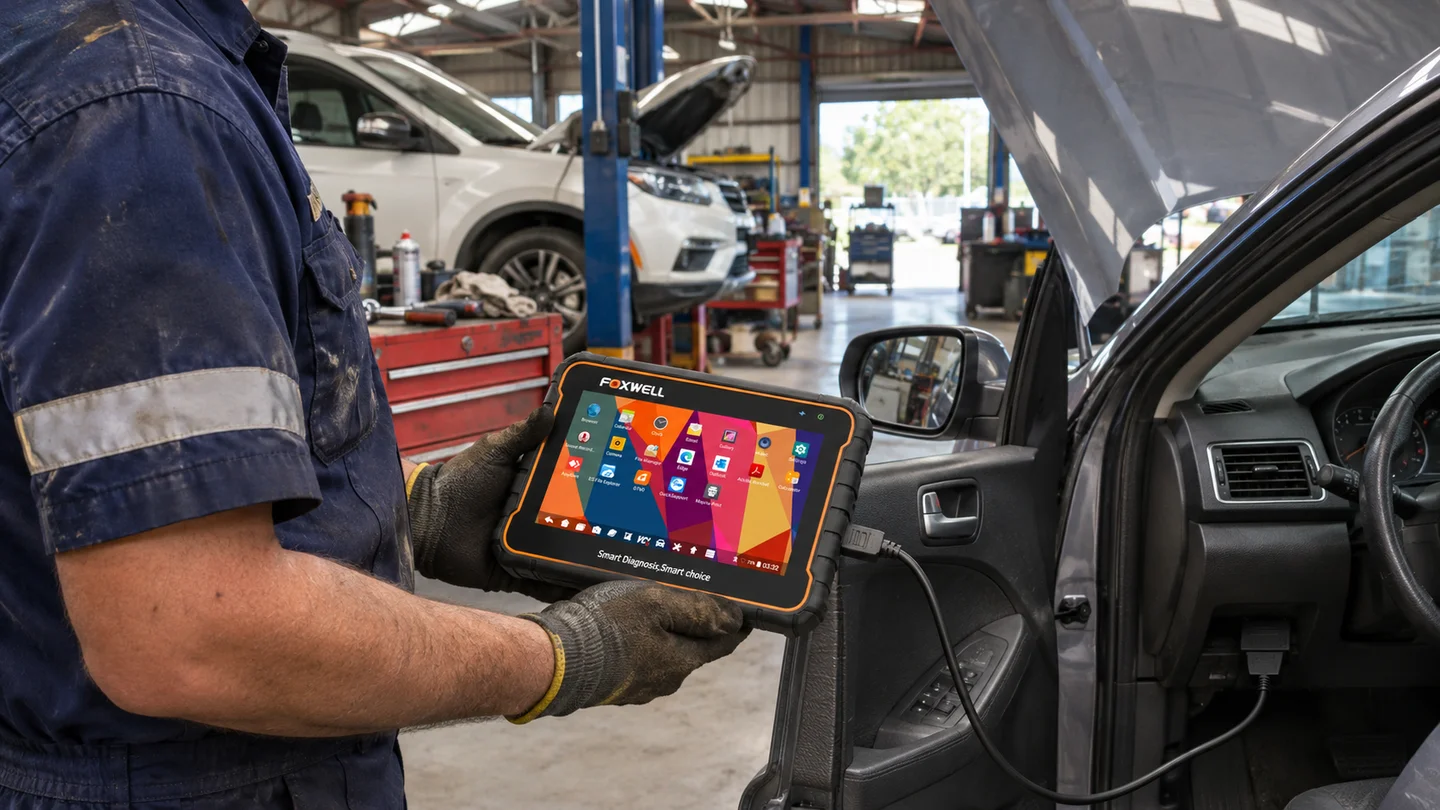
Doug used his FOXWELL GT60 to look at live data across several systems. One detail changed the direction of his investigation: although the lever was in D, the vehicle’s systems were not recognising that gear position. Following that clue, he traced the warnings to a communication problem with the gear selector.
“What initially looked like several separate electrical faults turned out to have the same communication issue behind them,” Doug explained.
From motorcycle racing to the workshop
In his reply, Doug also shared how he came to work on vehicles:
Hello Jasper,
The story of how I got into vehicle repair is a long one. These are the main parts of the journey.
I was about ten when my dad began teaching me to service and repair the motorcycles I raced. That is where my love of mechanics started. At first, we both enjoyed the racing. Gradually, I became fascinated by the machines themselves: how they worked, and how we could make them perform better.
At sixteen, I joined the British Army and trained in tank maintenance, turning mechanical repair into a career. It gave me a solid technical foundation and experience with a wide range of equipment, from trailers and military trucks to complex armoured vehicles, tanks and radar systems. Army work taught me to understand mechanical principles and diagnose problems methodically, especially in difficult conditions where equipment had to be dependable.
After leaving the Army, I moved into the automotive industry and worked in civilian garages. I worked on all sorts of vehicles and kept developing my skills. I was particularly interested in Japanese performance imports and owned an imported Toyota MR2 Turbo. OBD-II diagnostics were not yet widespread. Working on those cars meant understanding the mechanics, testing circuits by hand and following the symptoms step by step. There was rarely the convenience of plugging in a scanner and reading a few codes.
I stayed in the motor trade over the years. Later, looking for new opportunities and challenges, I left the UK and moved to Australia.
Today, the motorcycle racing of my childhood, my Army training, my workshop experience and modern diagnostic technology all shape how I work on cars and assess faults.
I have always believed a scanner is only as effective as the technician using it. Reading fault codes matters, but so does understanding how a vehicle’s systems affect one another. Equipment such as the FOXWELL GT60 lets me combine years of hands-on experience with modern diagnostics to identify faults more quickly and accurately.
Tools in this story
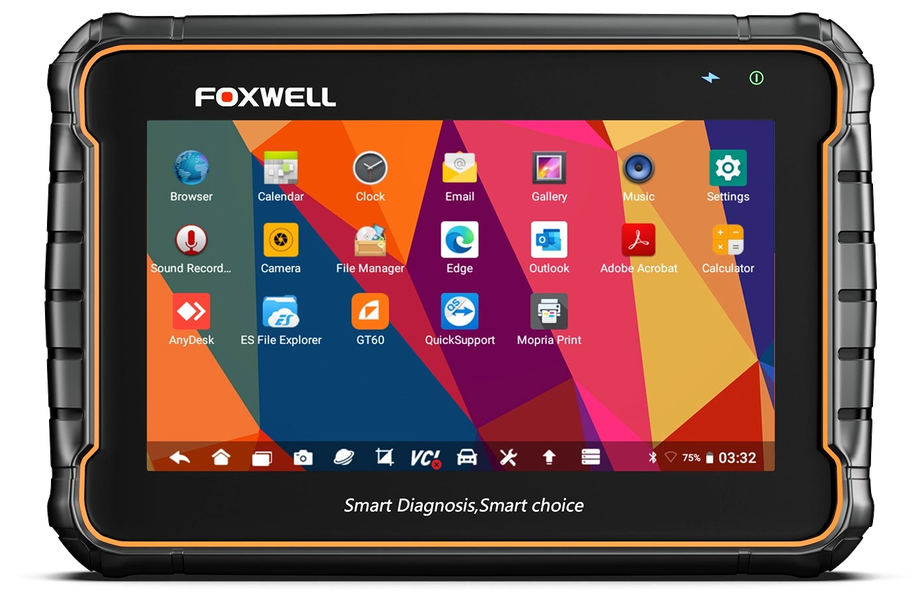
FOXWELL GT60
Official product page
View product for FOXWELL GT60 (opens in a new tab)